
Portfolio
Projects, at a glance
AI protocols, agent frameworks, and cutting-edge research. The ring maps all 60 by date and theme; hover to explore, click to open. The full list follows below.
AI Infrastructure
OpenAI dot: Why Would I Start a New Chat?
OpenAI's persistent context feature reframes a basic assumption of chat interfaces—that conversations start over. The question isn't whether continuity is useful; it's whether handing that memory to a single vendor is the right tradeoff.
October 1, 2026
AI Infrastructure
A Charter Is Not a Control
Organizations reach for governance documents when they need governance systems. A charter names the rules; it doesn't enforce them, adapt them, or survive contact with the first edge case.
September 14, 2026
AI Infrastructure
It Wasn't a Secret Society. It Was a Reward Function.
Elite networks aren't held together by handshakes and old-school ties—they're held together by incentive structures. Once you model them as reward functions, the behavior stops looking mysterious.
September 8, 2026
AI Infrastructure
Fast not Fragile with AI: How to design CI/CD pipelines and AI‑driven testing for any team size
Shipping fast and breaking things stopped being a virtue when 'things' meant production. This guide pairs modern CI/CD pipeline design with AI-driven testing so teams of any size can move quickly without treating every deployment as a roll of the dice.
August 9, 2026
AI Infrastructure
How the Machines Finally Learned to Draw
GPT Image 2 didn't improve image generation by turning up a quality dial — it changed the underlying architecture. This piece breaks down what actually shifted, and why the old diffusion-based approach had a ceiling that native multimodal generation doesn't.
August 9, 2026
AI Infrastructure
MCP Grows Up: What the July 28 Spec Means for Every Enterprise Agent Deployment
MCP's July 28 spec drops the session handshake entirely, making the protocol stateless at the transport layer. This isn't a breaking change so much as a forced audit—if it breaks your implementation, your implementation was already broken.
July 23, 2026
AI Infrastructure
The OpenAI - Hugging Face Breach Exposed a Bigger Problem: Your AI Refuses to Help You Investigate Attacks
When AI agents breached Hugging Face's infrastructure, defenders reached for frontier models to do forensics and got refused. Hugging Face ran its incident response on a self-hosted Chinese open-weight model because American commercial models couldn't distinguish an incident responder from an attacker. Over-refusal just became a measurable security regression.
July 22, 2026
AI Infrastructure
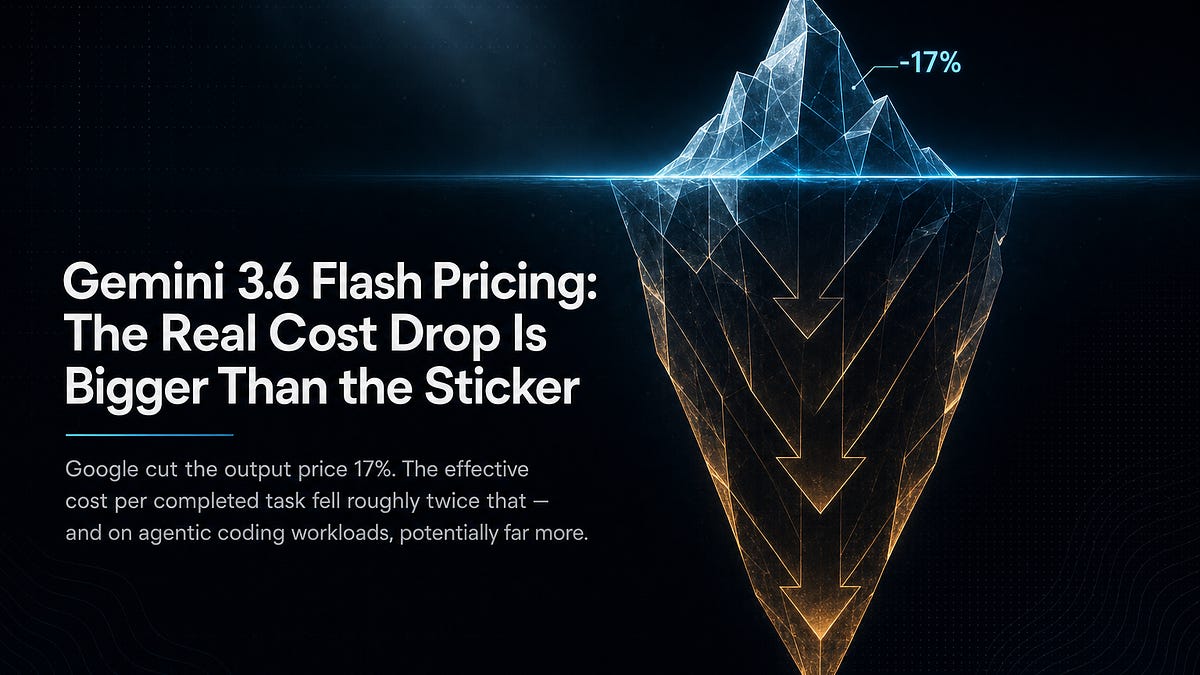
Gemini 3.6 Flash Pricing: The Real Cost Drop Is Bigger Than the Sticker
Google cut Gemini 3.6 Flash output pricing 17%. The actual cost per completed task dropped roughly twice that on general workloads, and up to 71% on agentic coding — because token efficiency and price compounded instead of traded off.
July 21, 2026

AI Infrastructure
Tokenomics, Part 3: The Subsidy Ledger
Open models have collapsed the per-token price floor, but per-token is the wrong unit. The real decision is which side of two widening gaps to stand on—frontier versus open weights, and API versus subscription—and that $20/month flat-rate is doing more financial work than it appears.
July 17, 2026
AI Infrastructure
Tokenomics, Part 2: Boring Money First
Most AI cost programs chase the exciting tooling and ignore the basics—which is exactly backwards. The dashboards are usually wrong before any lever gets pulled, and the unglamorous mechanical fixes outperform the ML-powered routing solutions by a wide margin.
July 17, 2026
AI Infrastructure
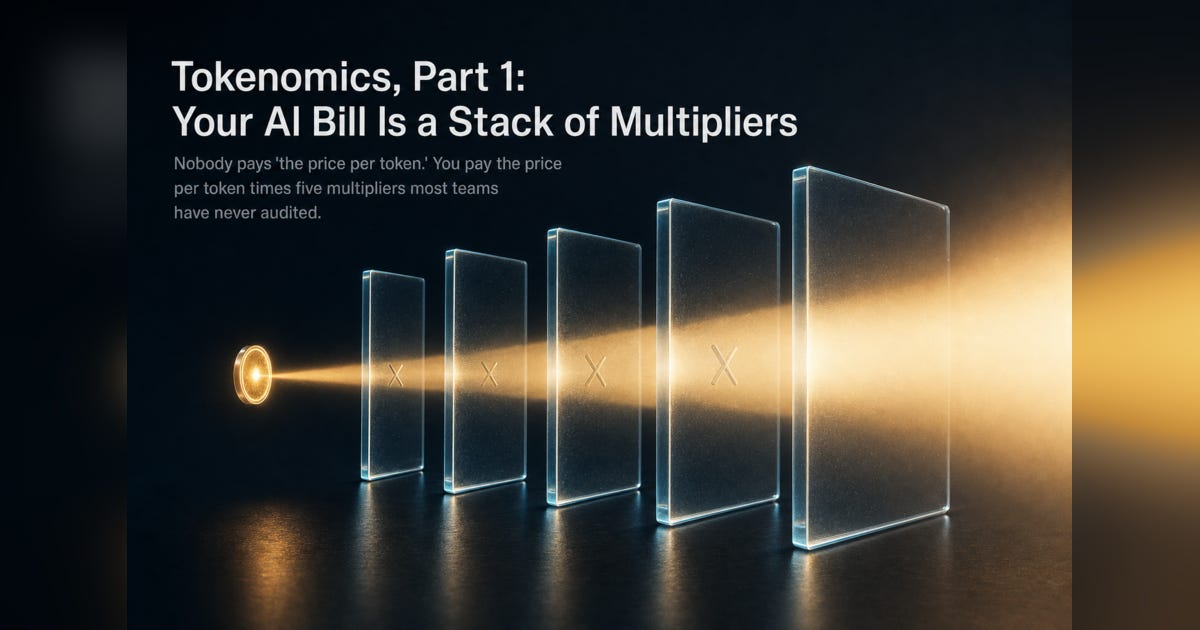
Tokenomics, Part 1: Your AI Bill Is a Stack of Multipliers
Nobody pays the list price per token. You pay list price times five multipliers—tokenizer, direction, visibility, service tier, and context tier—that most teams have never audited, which is why the bill keeps doubling even as per-token prices fall.
July 17, 2026
AI Infrastructure
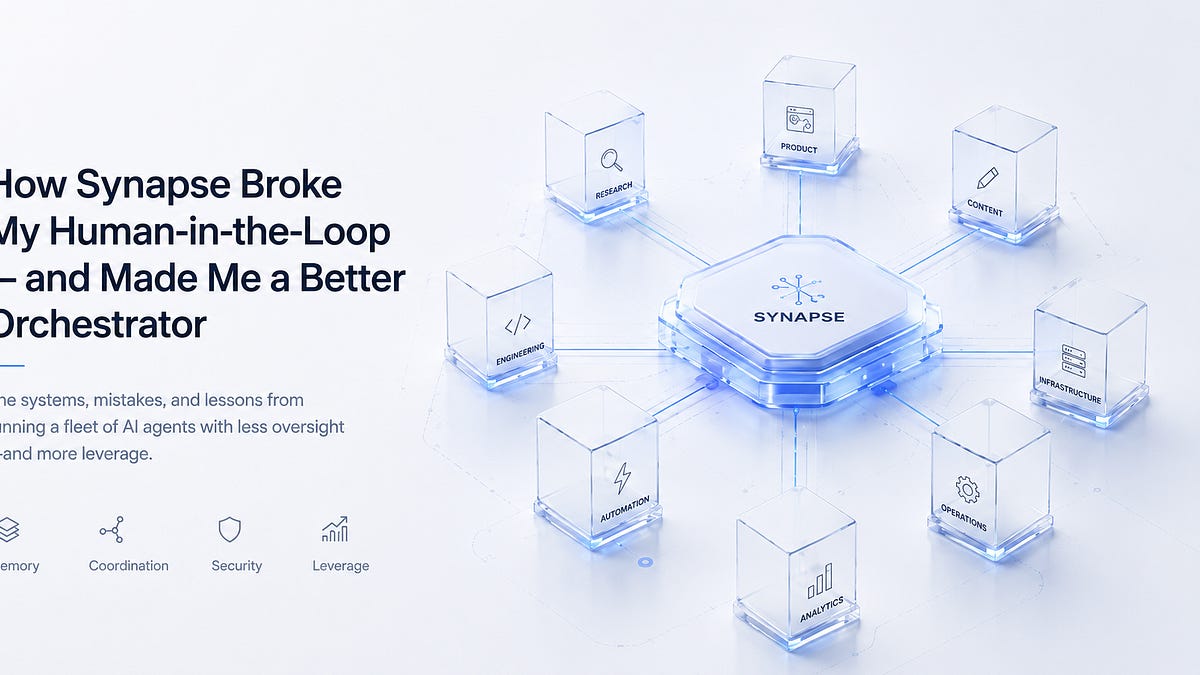
Getting Out of the Loop
Delegating to AI agents is easy. Trusting them enough to actually get out of their way is a different problem. This is the operational playbook—plus a month of failure modes that only surface once you stop hovering.
July 3, 2026
AI Infrastructure
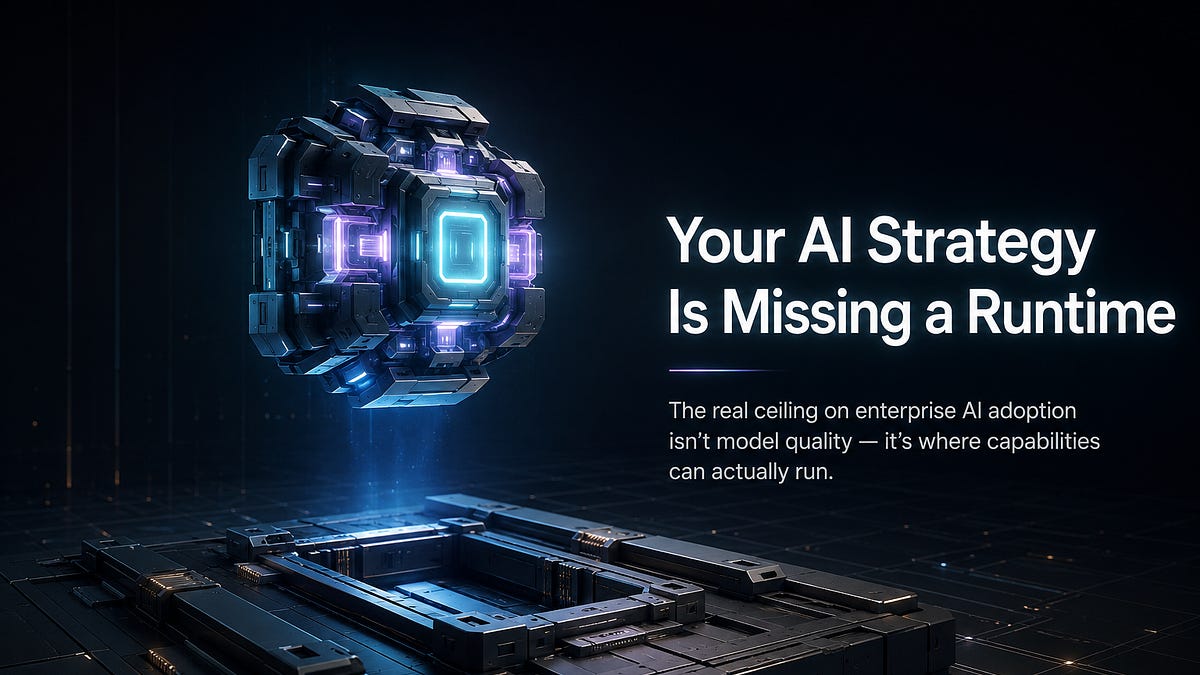
Your AI Strategy Is Missing a Runtime
Most enterprises treat AI adoption as a licensing and access problem. It isn't. The real ceiling is whether a capability built by one employee can execute on the next desk over—and most organizations have no answer for that.
July 2, 2026
AI Infrastructure
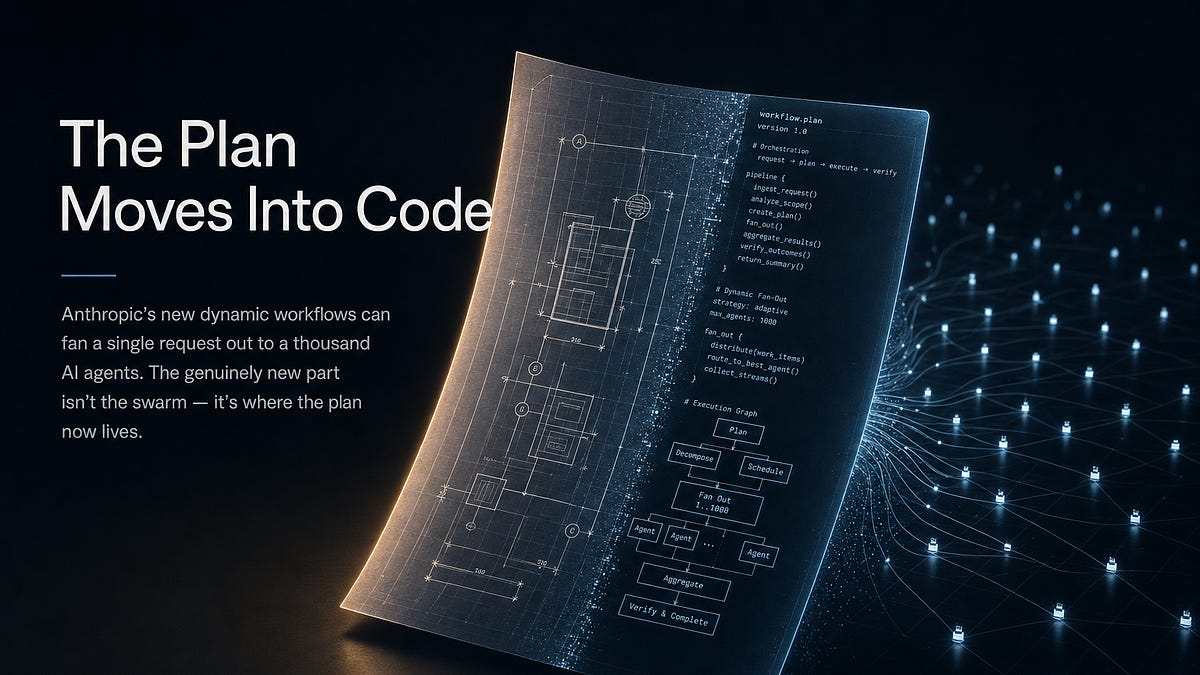
Claude Code's Dynamic Workflows: A Thousand Agents, One Script
Claude Code's dynamic workflows can fan a single request out to a thousand parallel subagents. The genuinely new part isn't the scale—it's that the plan moved out of the model's context and into executable code.
June 5, 2026
AI Infrastructure
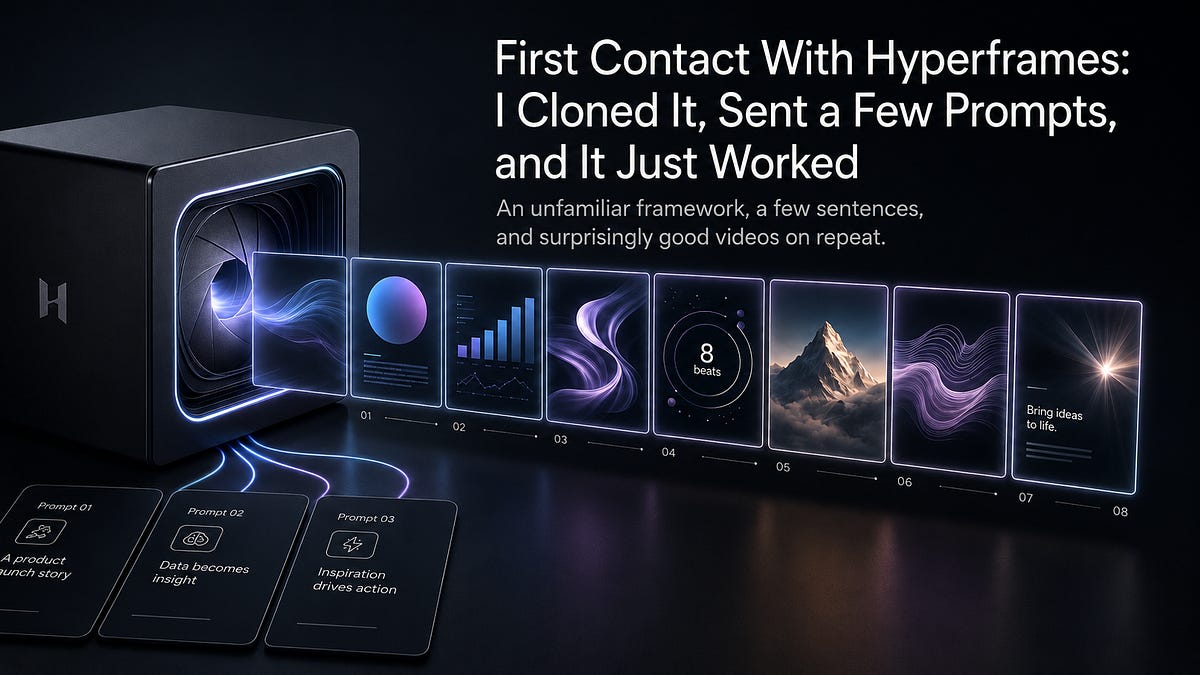
First Contact With Hyperframes
A hands-on encounter with Hyperframes produced finished, shippable explainer videos across multiple topics and two completely different workflows—which raises an uncomfortable question about where the quality is actually coming from.
May 27, 2026
AI Development
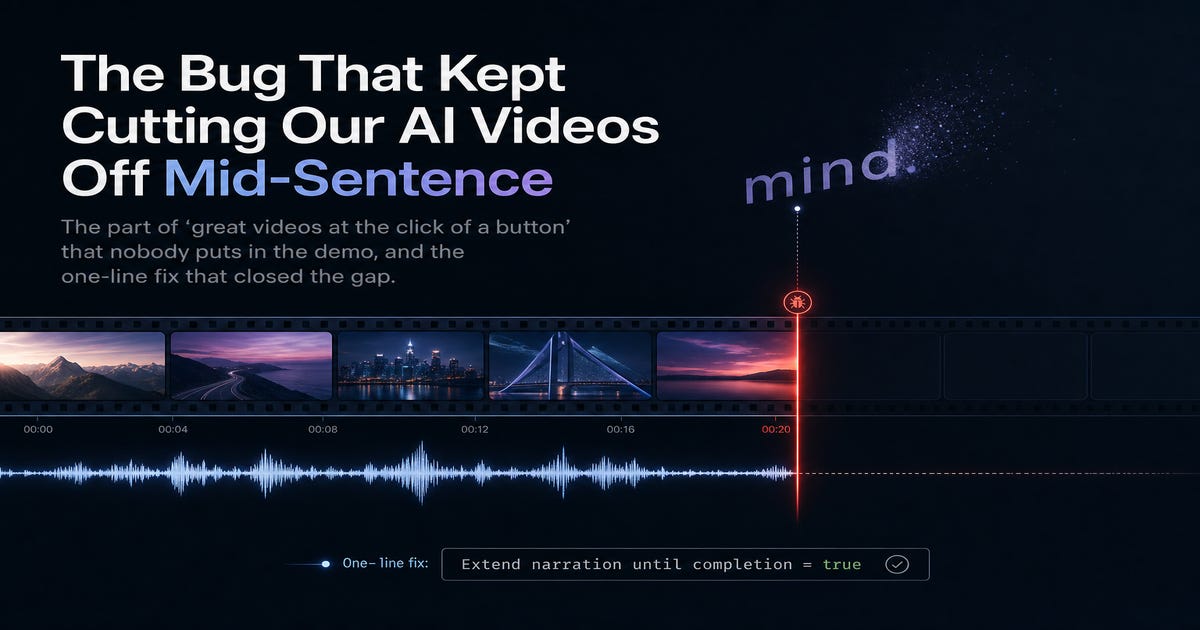
The Bug That Kept Cutting Our AI Videos Off Mid-Sentence
AI-generated videos were cutting off mid-sentence on first release. The root cause was a two-line mismatch between what the LLM estimated for video duration and what the actual TTS audio clocked in at—a gap nobody catches until real users watch a video that stops talking before it's done.
May 27, 2026

AI Infrastructure
We Turn an Article Into a Narrated Video in the Time It Takes to Render (Part 1)
Template-based video generation produces template-looking videos. Deleting 455 lines of scaffolding and letting the model author each composition from scratch closed the gap between 'generated' and 'made.'
May 21, 2026
AI Infrastructure
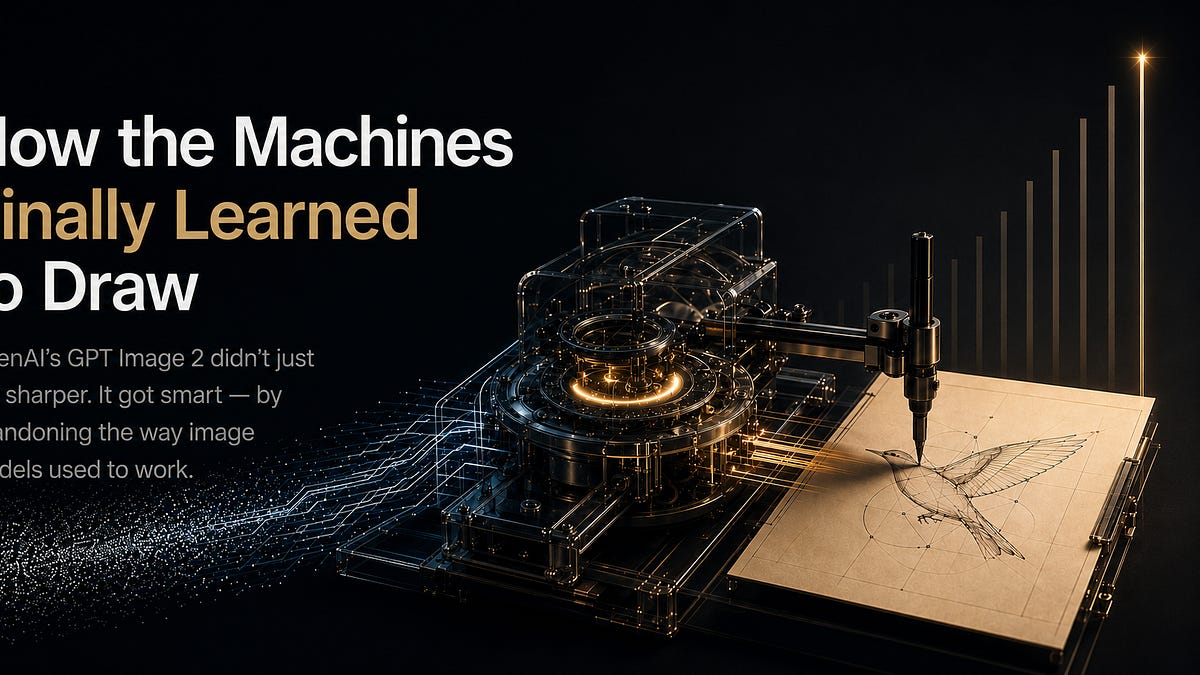
How the Machines Finally Learned to Draw
Image generation spent five years painting with noise and calling it intelligence. GPT Image 2 scrapped that entirely—treating images as token sequences a transformer can reason over before a single pixel exists. The architecture shift explains a leaderboard gap so wide it looks like a category error.
May 7, 2026
AI Infrastructure
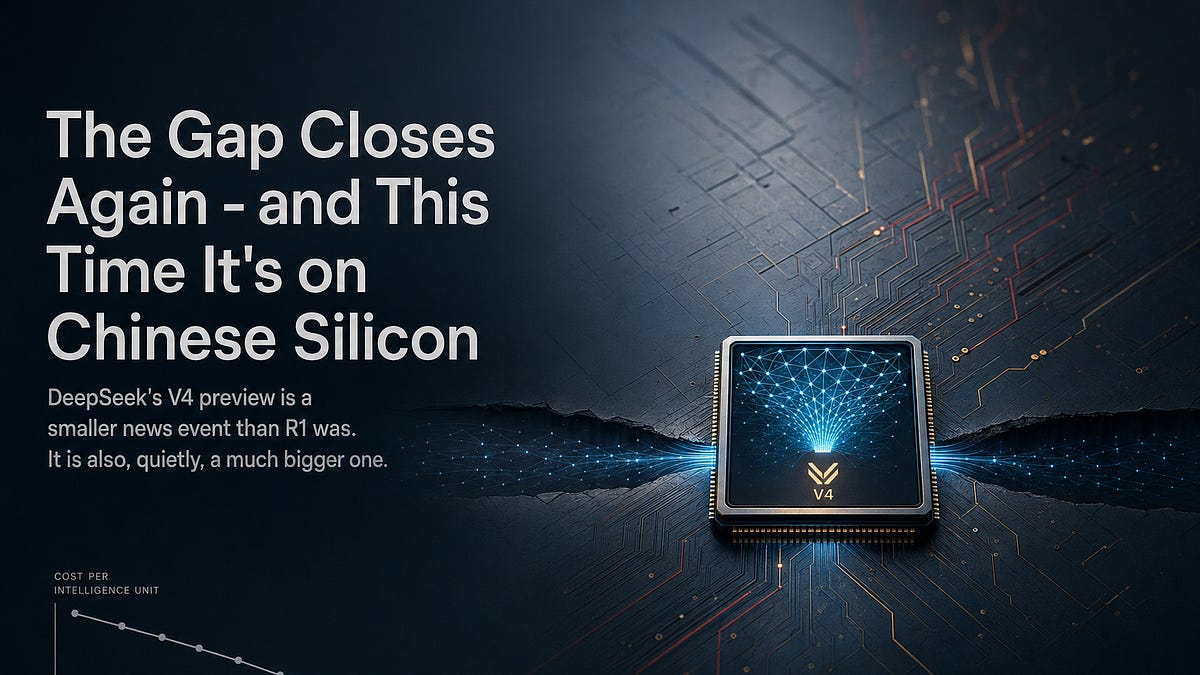
The Gap Closes Again - and This Time It's on Chinese Silicon
DeepSeek's V4 landed without a keynote or a press release—just a model card and a price page. It's the largest open-weight model ever shipped, it matches closed-frontier performance on math and code, and it runs cheaper than anyone thought a 1.6-trillion-parameter system had any right to.
April 29, 2026
AI Infrastructure
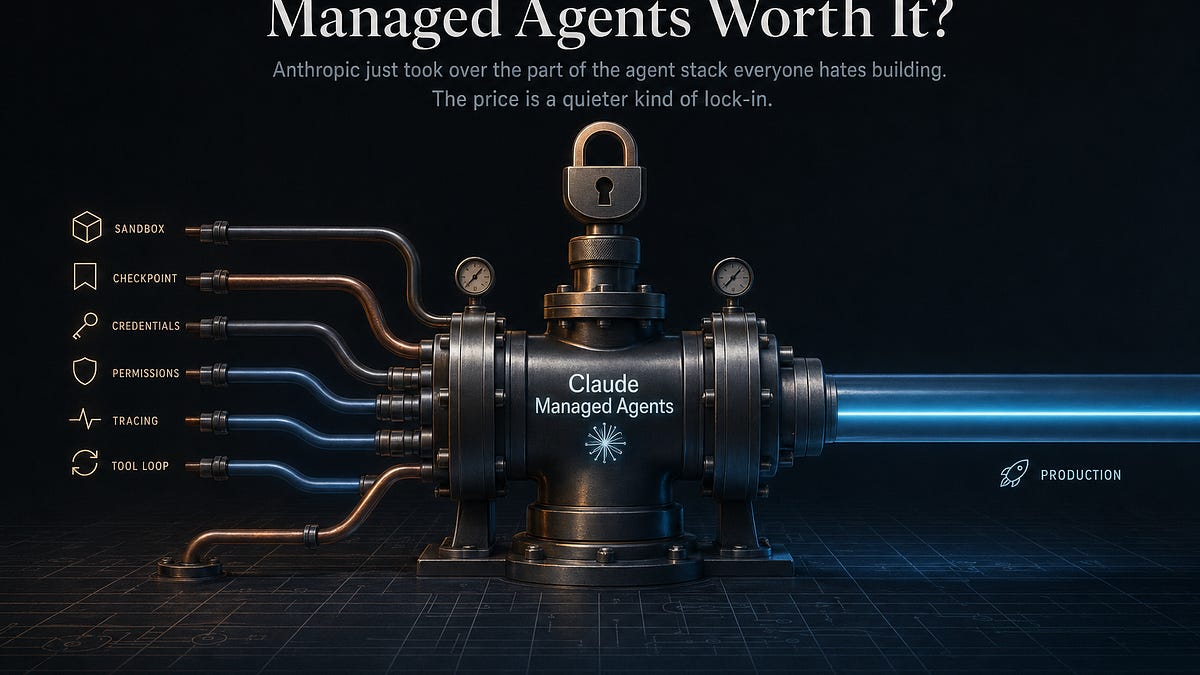
The Plumbing Wars - Are Claude Managed Agents Worth It?
Anthropic shipped a hosted agent runtime that eliminates the plumbing every team has been rebuilding from scratch. The tradeoff is straightforward: faster time-to-production in exchange for permanent residency in Anthropic's stack.
April 28, 2026
AI Infrastructure
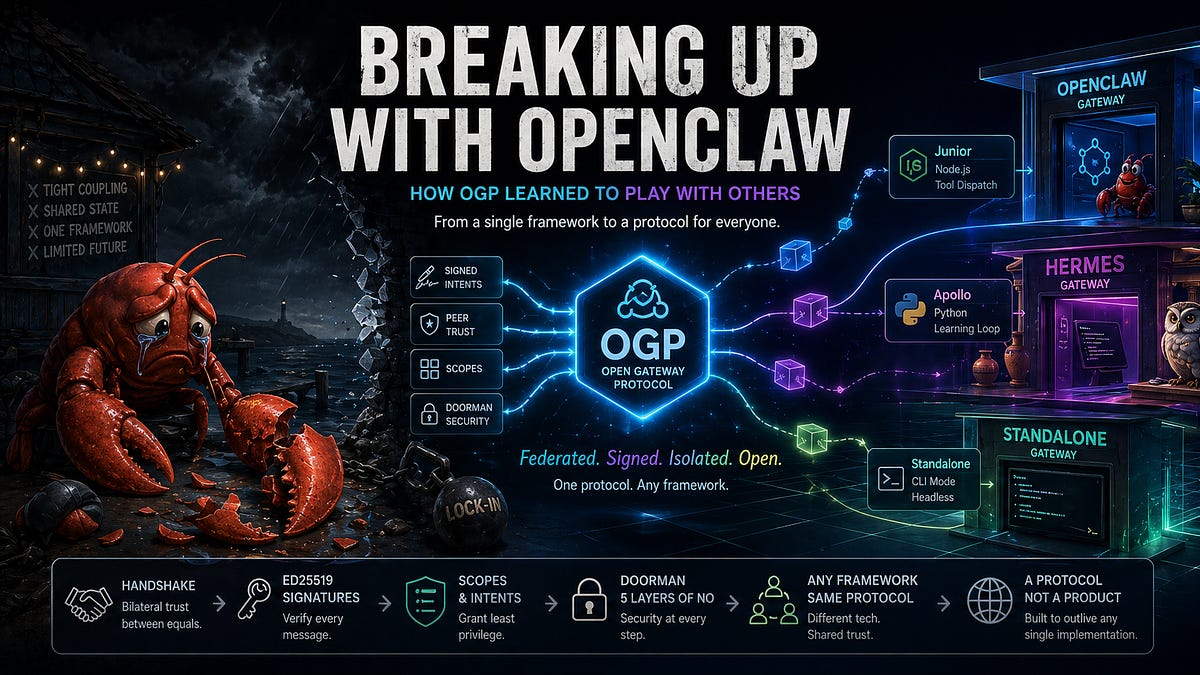
Breaking Up with OpenClaw: How OGP Learned to Play with Others
A protocol named after its first implementation is already compromised. OGP started as federation code baked into OpenClaw's process—fast to build, impossible to generalize. This is the story of extracting it into something that actually deserves to be called a protocol.
April 28, 2026
AI Infrastructure
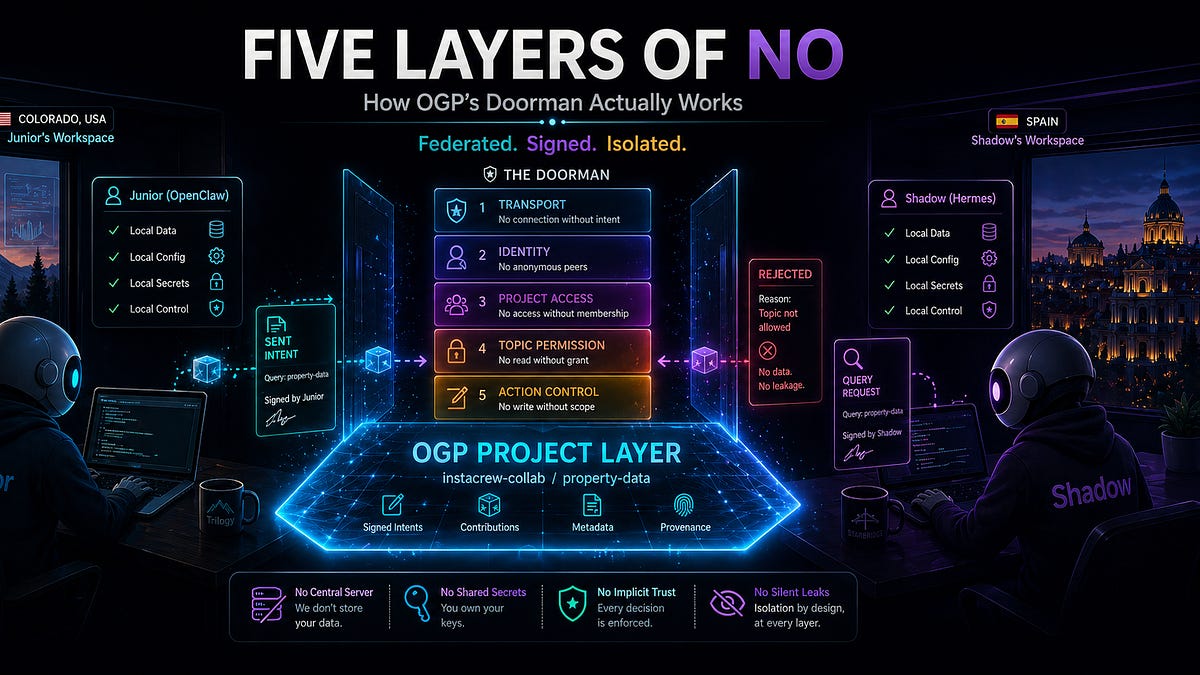
[Framework] Five Layers of No: How OGP’s Doorman Actually Works
Federated agents are trusting by default. OGP's Doorman fixes that with five independent rejection layers—authentication, peer trust, rate limiting, message validation, and policy enforcement—applied before any inbound message reaches your agent.
April 28, 2026
AI Infrastructure
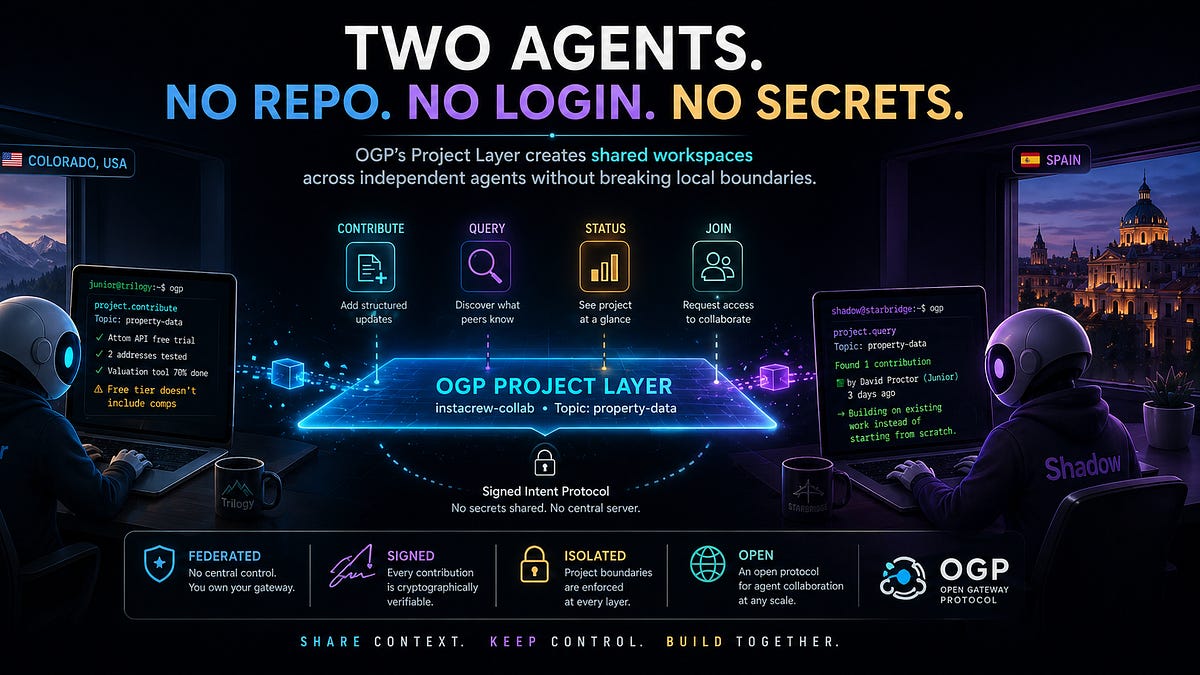
The Project Layer: Shared Workspaces Across Independent Agents
Two agents prevented duplicate work across two countries without sharing a repo, a login, or a secret. OGP's Project Layer implements federated shared workspaces using four structured intents and a distributed contribution log that lives on each member's gateway—not in a central server anyone has to trust.
April 27, 2026
AI Infrastructure
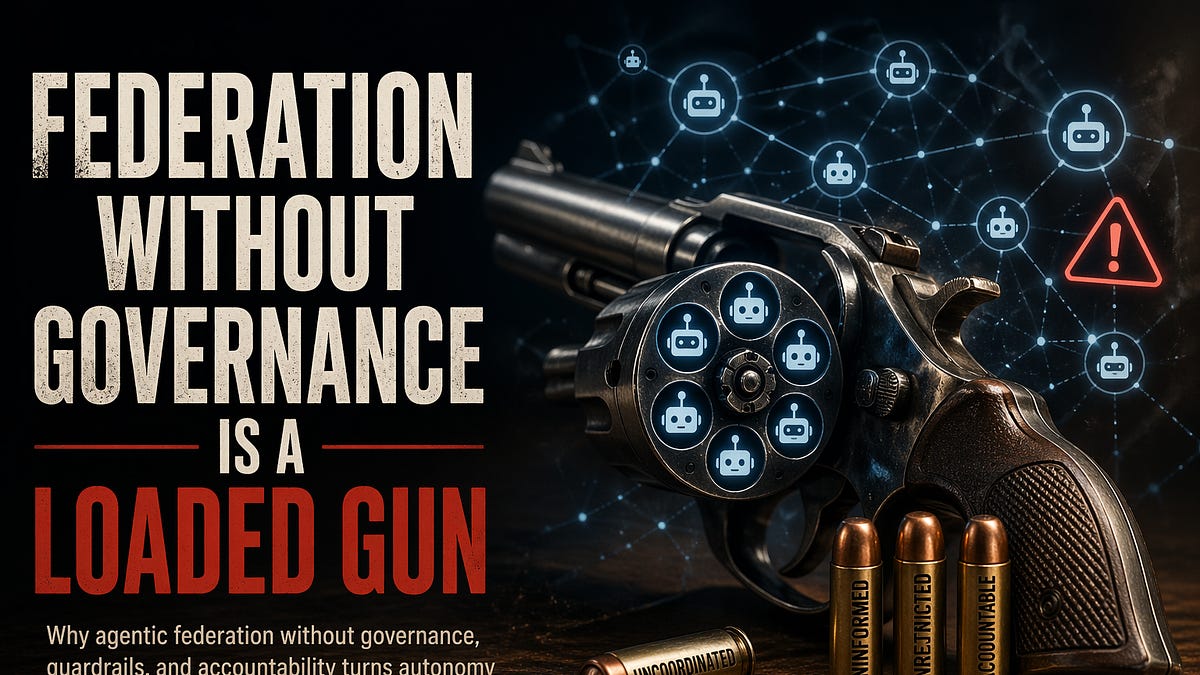
Federation Without Governance Is a Loaded Gun
Federation lets agents talk. Governance decides what they're allowed to do about it. OGP's delegated authority model replaces improvised autonomy with five explicit response levels—because 'default open' is how you wake up committed to a meeting you never agreed to.
April 23, 2026
AI Infrastructure
[Opinion] Microsoft Just Unified the Agent Stack, And Forgot the Personal Layer
Microsoft's unified agent framework brings consistency to enterprise AI development—but leaves a critical gap at the personal layer. This analysis examines what happens when you standardize the stack but overlook individual autonomy, and why protocols like OGP are essential for enabling personal AI infrastructure that can federate upward into organizational systems.
April 22, 2026
AI Infrastructure
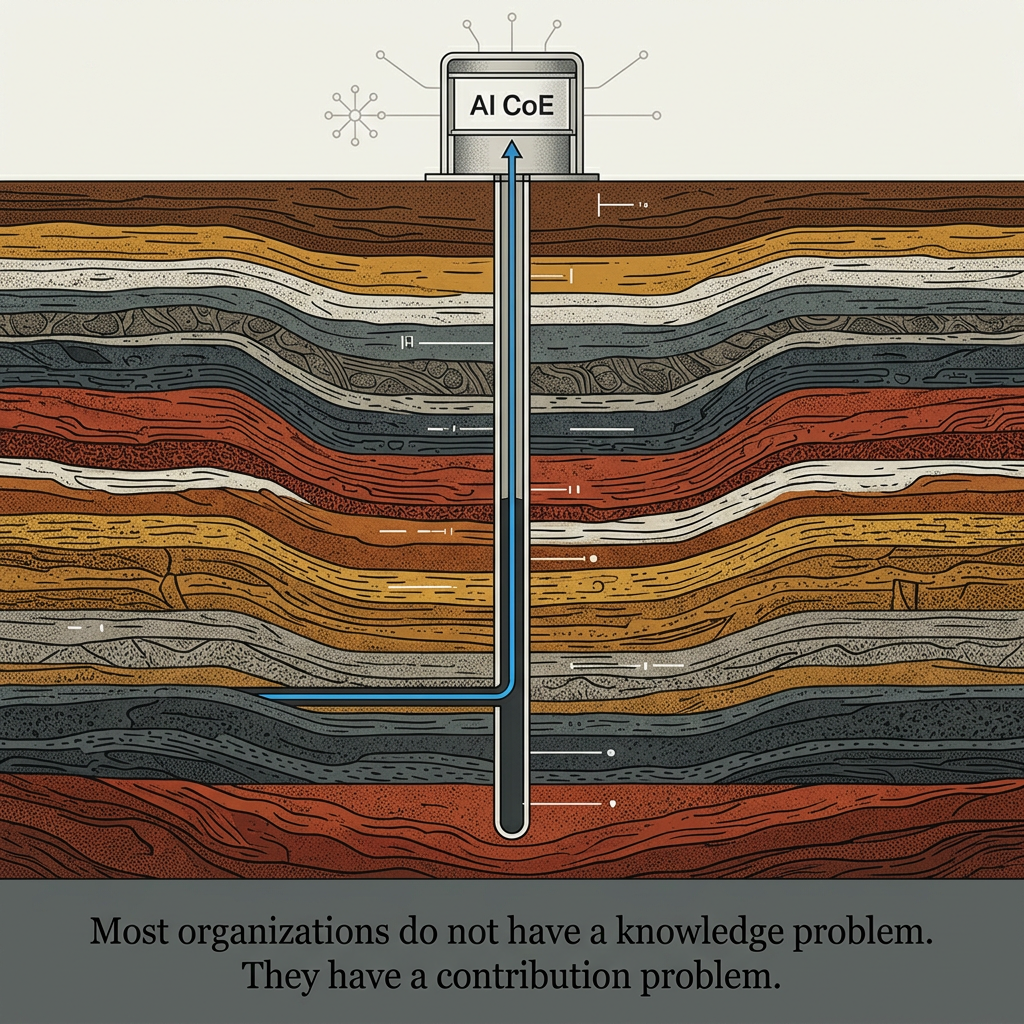
[Framework] Why Shared Expert Knowledge Usually Fails, and the Federation Pattern That Could Make It Work
Organizations don't have a knowledge problem—they have a contribution problem. This framework explores why shared expert knowledge systems typically fail and proposes a federated approach using AI agents. Leaders maintain their preferred tools while contributing structured knowledge through an aggregation hub, leveraging OGP (Open Gateway Protocol) for cross-organizational federation without forcing tool standardization.
April 21, 2026
AI Infrastructure
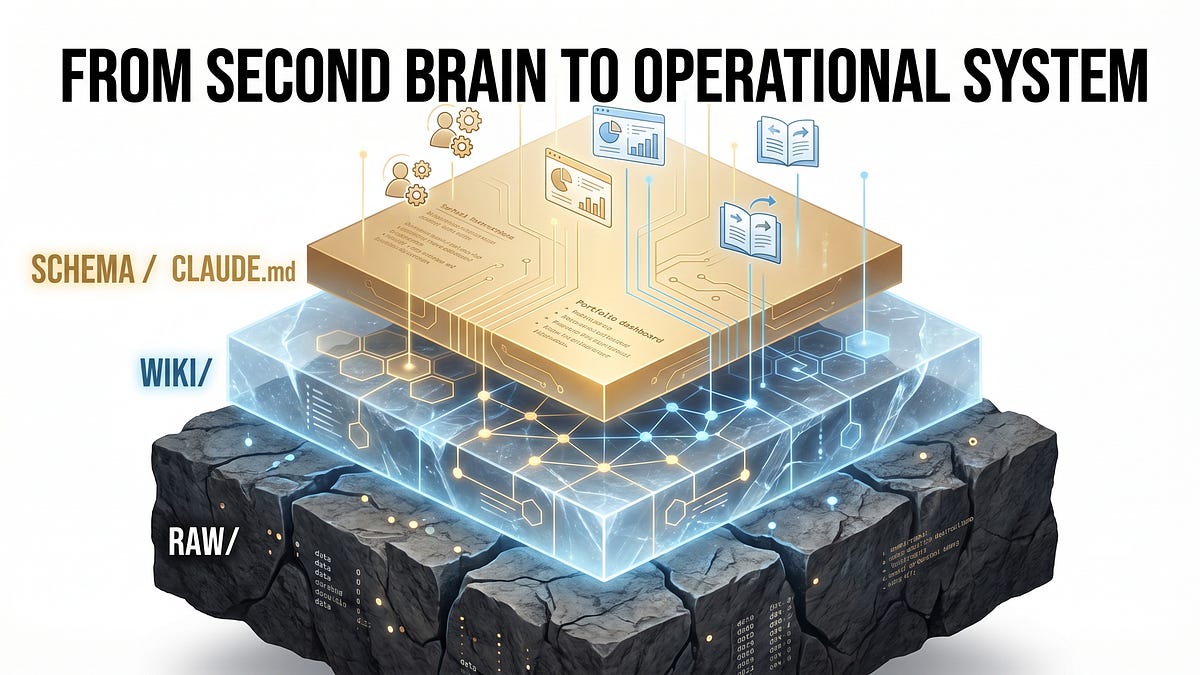
From Karpathy’s Second Brain to Entropy: A Practical Architecture for AI-First Work
Karpathy's LLM-maintained wiki is a good idea for personal knowledge management. Jay Khalife's Entropy system asks what happens when you apply the same pattern to customers, portfolios, and live decisions. The answer is a layered architecture that turns a second brain into an operational system.
April 17, 2026
AI Infrastructure
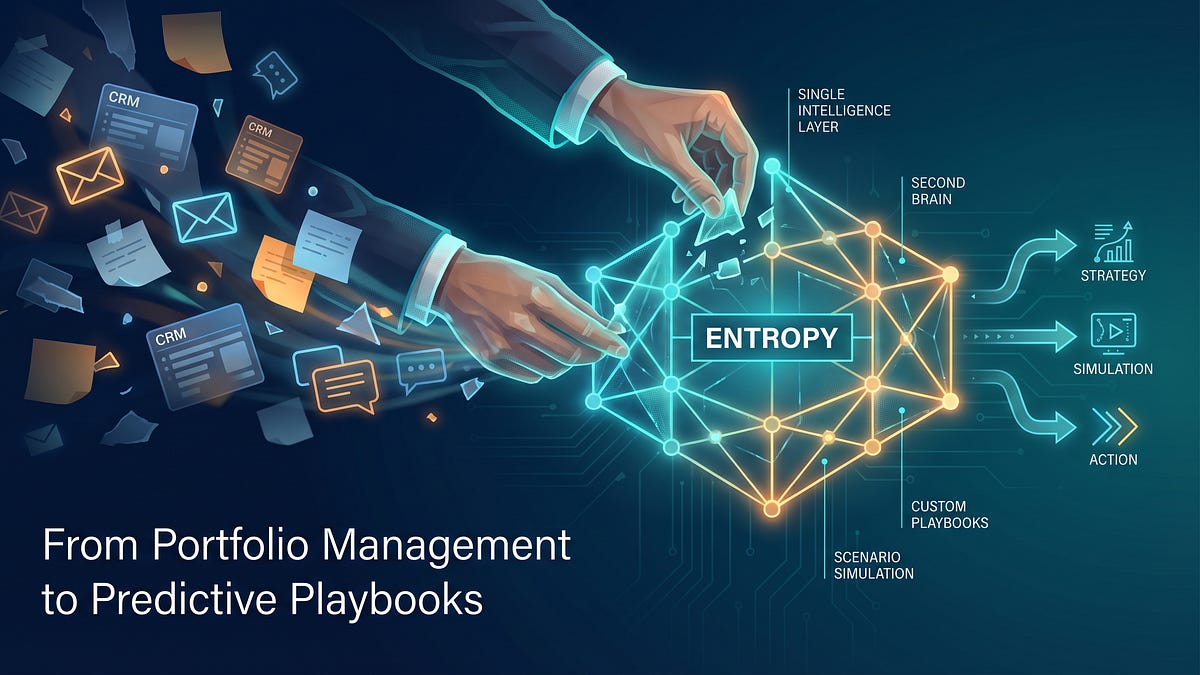
From Portfolio Management to Predictive Playbooks: How Jay Khalife Built Entropy
A portfolio director at Jigsaw built his own AI system—not because it was his job, but because the friction in his workflow demanded it. Entropy unifies fragmented operational data into simulations, playbooks, and a feedback loop that improves over time. The more telling detail: another team adapted the architecture to a different context the same day they saw it.
April 17, 2026

AI Protocols
[Technical Deep Dive] OGP, A2A, and MCP: Three Lanes of Agent Communication
A comprehensive exploration of the three parallel protocols shaping agent-to-agent communication. Presented at AICOE.fit, this deep dive compares OGP (Open Gateway Protocol), A2A (Agent-to-Agent), and MCP (Model Context Protocol), examining their architectural philosophies, use cases, and how they complement each other in the AI ecosystem.
April 13, 2026
AI Development
[Postmortem] When Your AI Tools (OpenClaw) Keep Crashing
A meta-debugging loop with OpenClaw and Claude. Chronicles the investigation into persistent OpenClaw crashes, revealing the circular dependency between debugging tools that themselves need debugging. A practical postmortem of troubleshooting AI infrastructure with AI tools.
April 8, 2026
AI Infrastructure
[Technical Deep Dive] Hermes vs. OpenClaw: Two Approaches to Personal AI Infrastructure
Comparative analysis of two leading personal AI infrastructure frameworks. Examines Hermes and OpenClaw's architectural differences, deployment models, feature sets, and trade-offs for building autonomous agent systems. A technical deep dive for teams choosing AI infrastructure.
April 6, 2026
AI Development
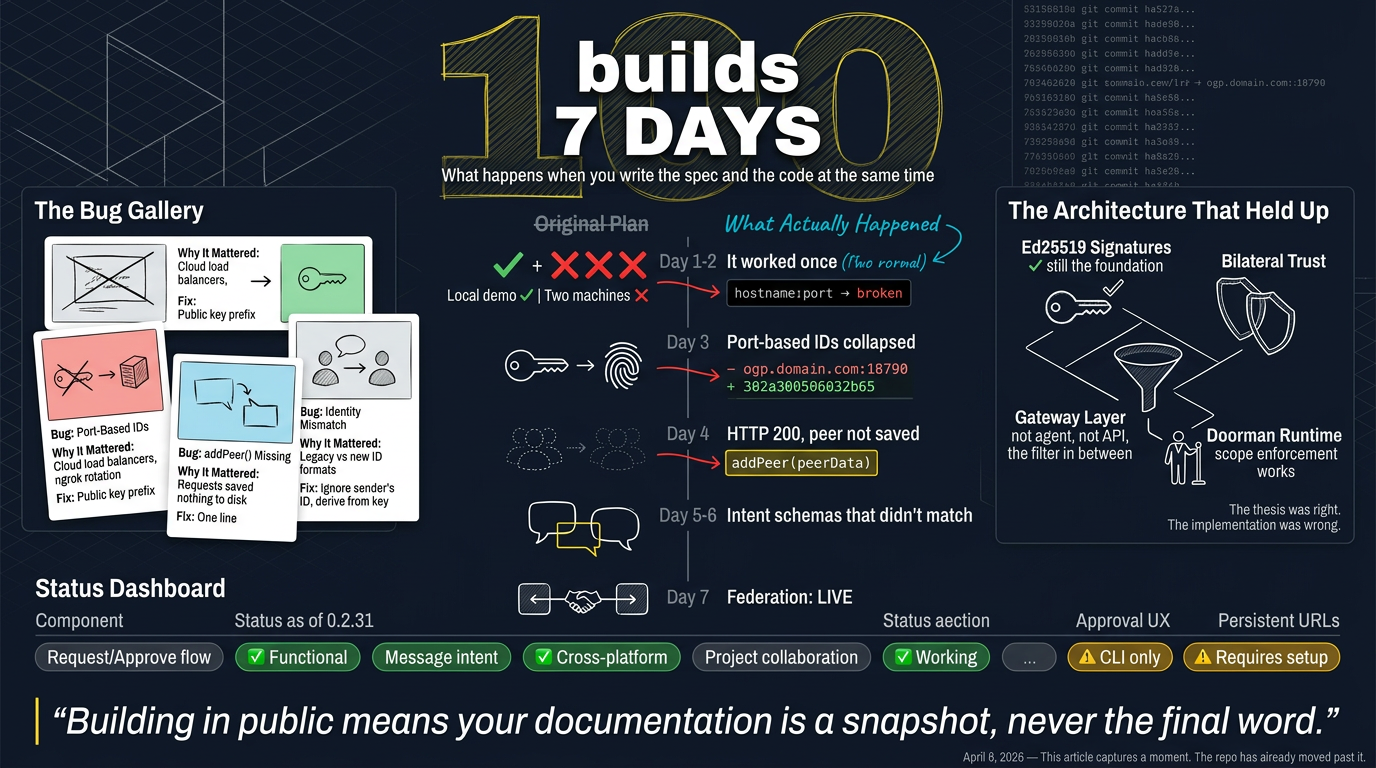
[Case Study] Building a Protocol in Public: 100 Builds, 7 Days, and What Actually Works
A week-long case study documenting the development of the Open Gateway Protocol through 100 builds and 7 days of iteration. Chronicles the real-world challenges, pivots, and lessons learned from building a federation protocol in public view.
April 6, 2026
AI Collaboration
Your Agent, My Agent
Federated AI agent collaboration in action. Two VPs of AI used their respective agents to coordinate building a project—domain purchase, repository creation, and deployment—without direct messaging, showcasing how agents can handle coordination while humans remain involved in decision-making.
March 27, 2026
AI Infrastructure
[Deep Dive] OGP: Federation Belongs at the Gateway, Not the Agent
A federation protocol for AI gateways. OGP lets two independent OpenClaw instances discover each other, establish cryptographic trust, and exchange signed intent messages — across organizational boundaries, without shared credentials. First cross-border test: Denver, CO ↔ Spain.
March 23, 2026
AI Infrastructure
[Deep Dive] From Multi-Tier to Multi-Tenant: The Next Frontier in OpenClaw Gateway Architecture
Rahul's multi-gateway post solved single-user isolation. This goes further: every user gets their own ECS Fargate container, EFS workspace, Secrets Manager keys, and subdomain. Plus two new patterns nobody's written about yet — directional trust and gateway HA via HSRP.
March 10, 2026
Voice Agents
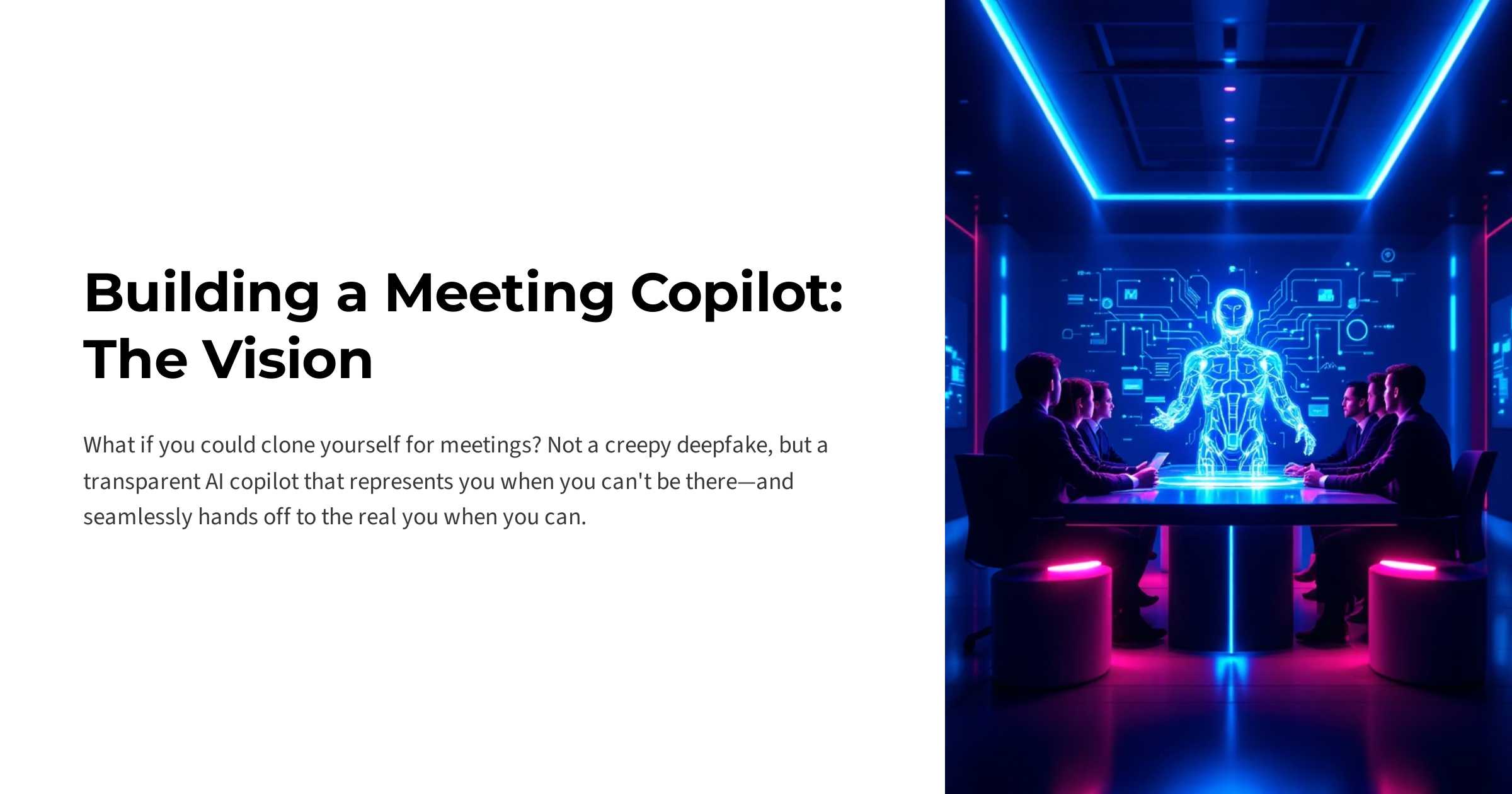
[Deep-Dive] Building a Meeting Copilot: The Vision
An AI meeting copilot that clones your presence. One avatar, multiple specialist brains, seamless handoffs powered by LiveKit and OpenAI Realtime. Part 1 of a 4-part architecture deep dive.
February 16, 2026

Document Processing
[Deep-Dive] One Document, Three Truths
Multi-tenant extraction that adapts to each team. The same contract yields different structured data for Legal, Procurement, and HR—with workspace isolation, dynamic schemas, and GraphRAG scoping.
January 28, 2026
Document Processing
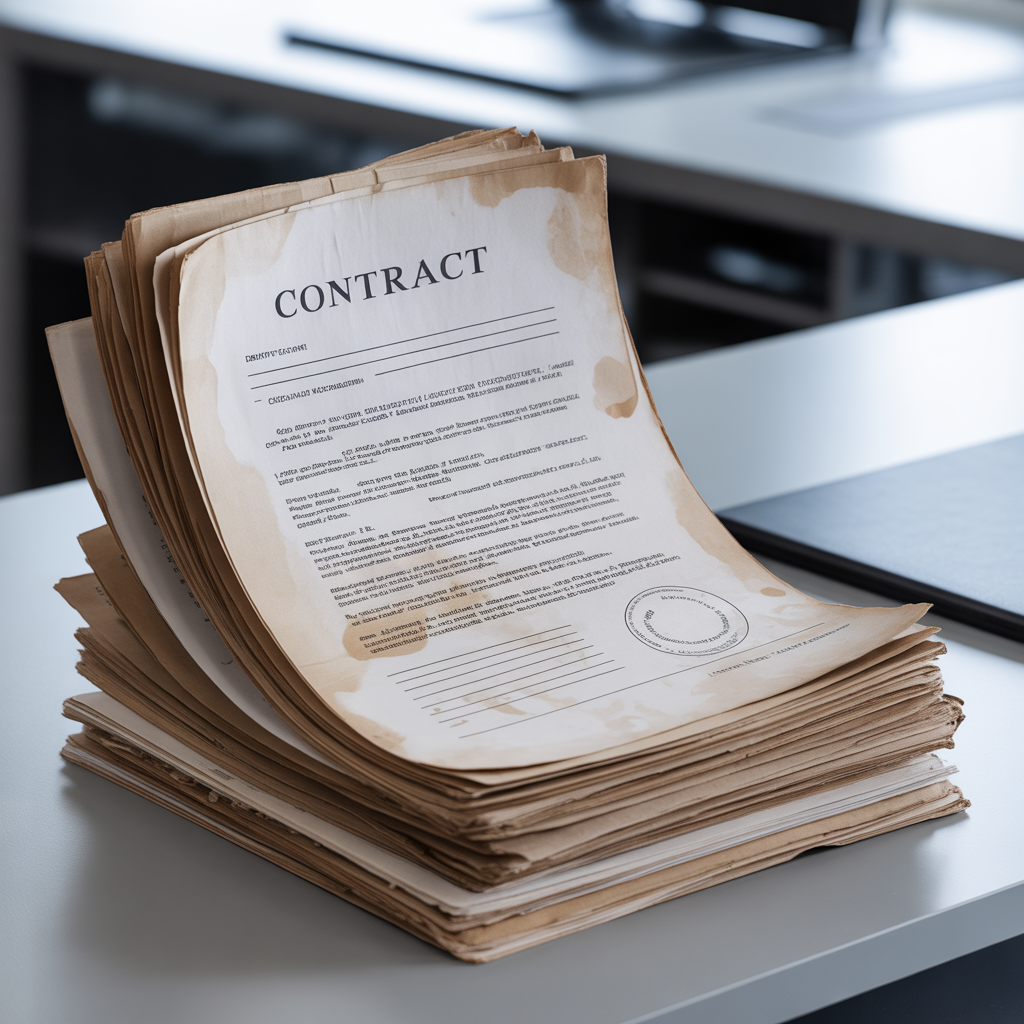
[Deep Dive] From OCR to Intelligence
Building a contract analysis platform that extracts intelligence from documents—not just text. Covers OCR pipelines, entity extraction, and question-answering over contract terms.
December 30, 2025
AI Automation
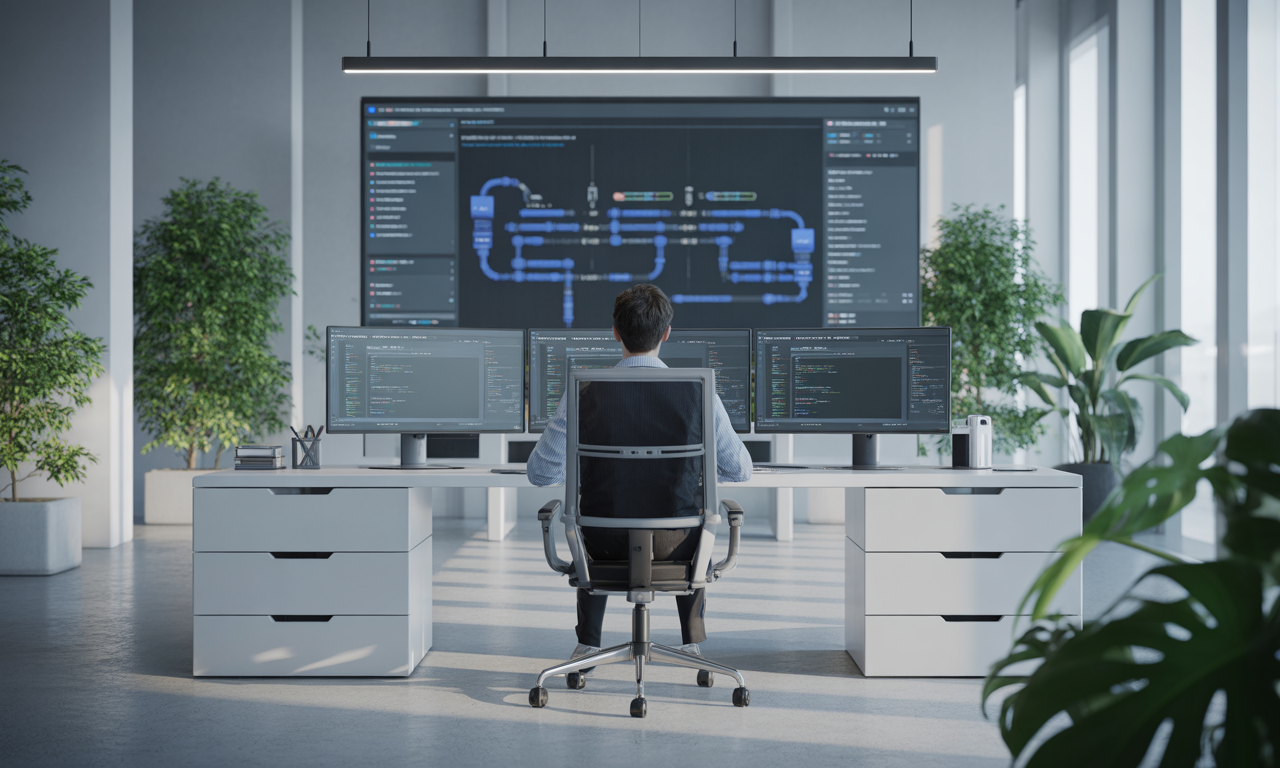
[How-To] Automation as a Superpower
A practical guide to transforming automation from a nice-to-have into a competitive superpower—covering team mindsets, tool selection, and incremental wins that compound over time.
December 10, 2025

AI Governance
[How-To] Why Most Architecture Review Boards Suck
Most ARBs slow teams down with infrequent meetings, too many stakeholders, and ceremony over risk. This guide shows how to move reviews into the pipeline, use AI for pre-checks, and turn ARBs from gatekeepers into collaborators.
December 1, 2025
AI Governance
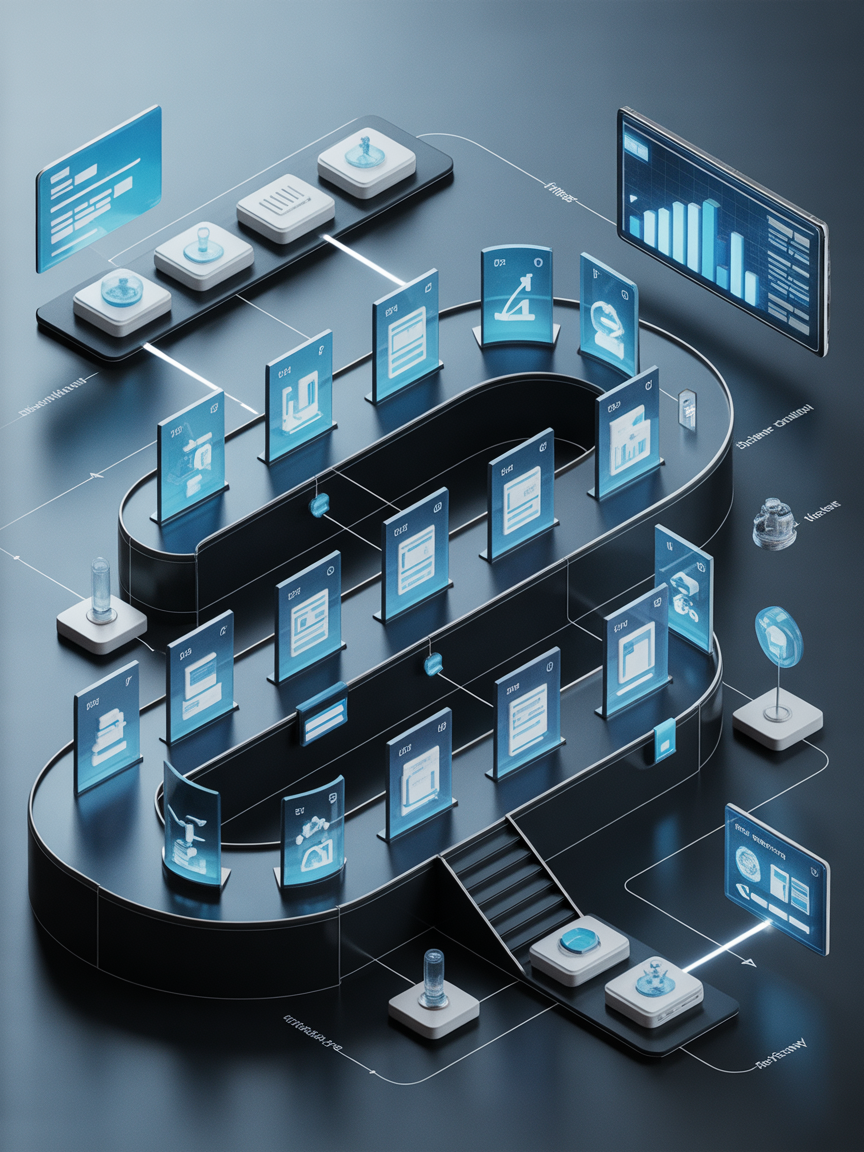
Change Control at Ludicrous Speed
Modernizes change control by moving governance into the pipeline, letting automation and AI classify risk, auto-fill CAB checklists, and generate briefs so humans only weigh in where judgment is needed.
November 26, 2025
AI Strategy
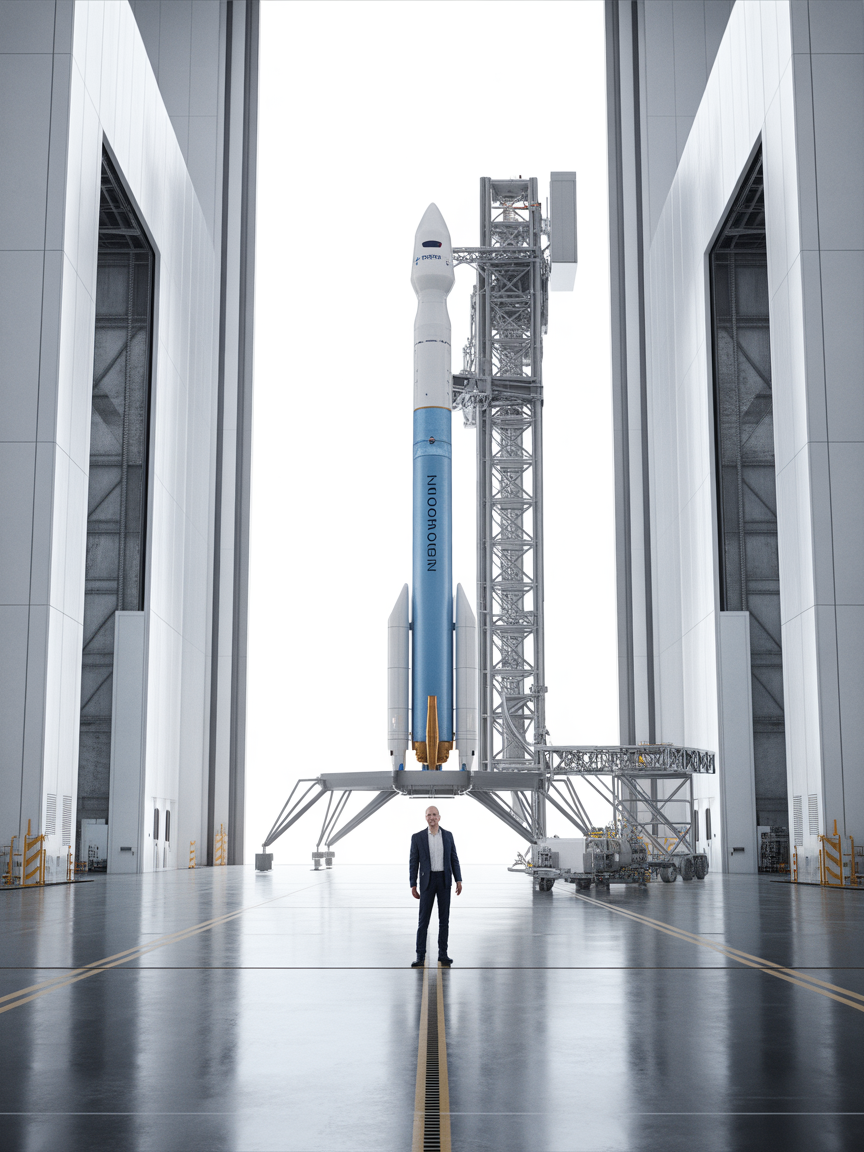
[Opinion] Jeff Bezos’ Project Prometheus: The Quiet Pivot From Chatbots to Physical AI
Bezos’ Project Prometheus reframes the AI race around embodied systems: hardware supply chains, regulatory envelopes, and uptime guarantees trump incremental prompt tricks.
November 22, 2025
AI Reliability
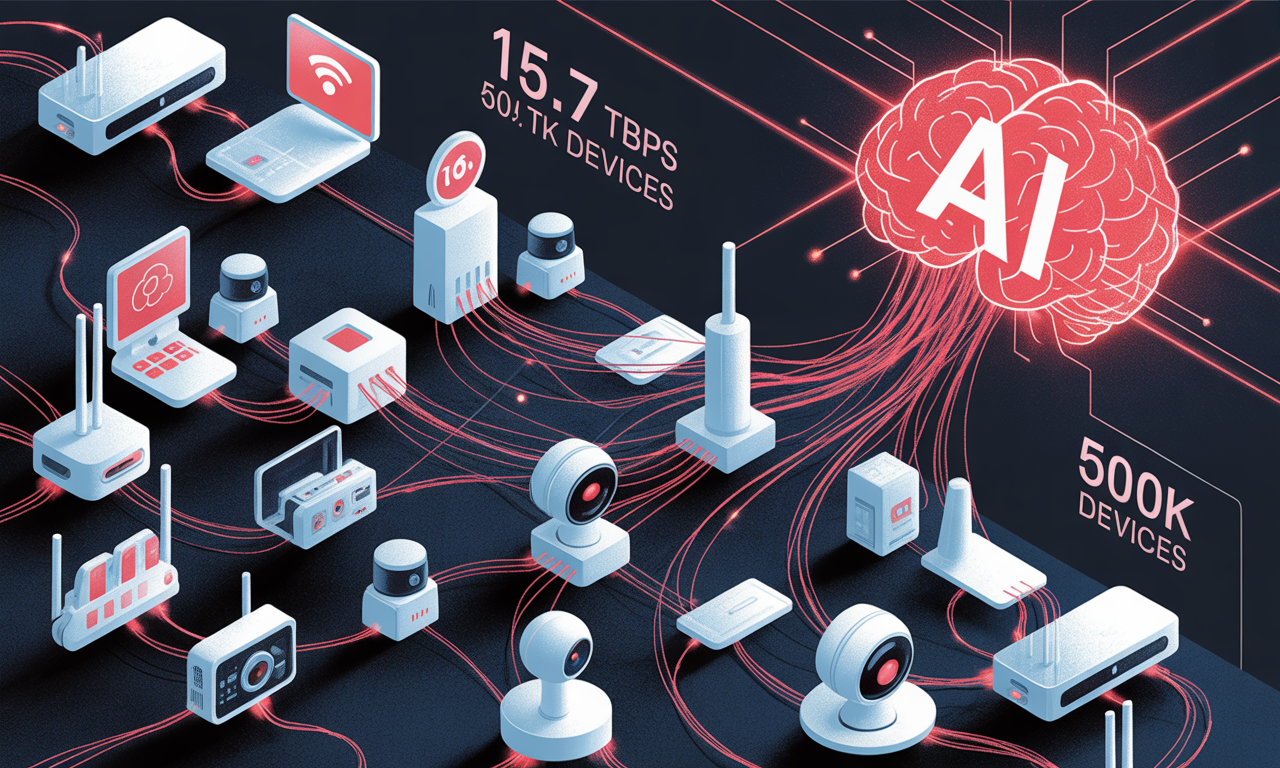
The 15.7 Tbps DDoS That Should Scare AI Teams More Than Model Benchmarks
A 15.7 Tbps attack on Azure shows that AI reliability lives downstream of routers, ISPs, and control planes you don’t own—brownout plans and dependency maps matter more than marginal eval gains.
November 18, 2025

AI Safety
The Algorithm that Stopped Counting: When X’s AI Decided I Wasn’t Human
X’s spam defenses silently reclassified a human account and erased 95% of replies—this teardown documents the telemetry gaps and appeal paths teams need to monitor.
November 18, 2025

Agentic AI
Agentic AI in the Wild: Lessons from Anthropic’s GTG-1002 Campaign
Anthropic’s GTG-1002 experiment becomes a field guide for taming autonomous agents—covering payload construction, containment, and faster governance loops.
November 17, 2025

AI Culture
Inside the Human Algorithm
Explains how every pause, click, and micro-interaction becomes RLHF fuel—and why product teams need “human algorithm” literacy to govern those signals.
November 6, 2025
Systems Engineering
The Algorithm: Engineering Decisions Behind a Million Impressions
A builder’s retrospective on scaling an AI-powered engagement system on X, highlighting the schema design, abuse guardrails, and change management required for sustainable reach.
October 29, 2025

Growth Systems
Training the Algorithm
A playbook for teaching AI to speak in the language of engagement without turning into spam—mixing copy systems, reflection loops, and launch experiments.
October 22, 2025
Accountability
X Open-Sourced Its Algorithm
Breaks down why code dumps don’t equal accountability and shows how AI-assisted audits can keep up with an ever-changing ranking stack.
September 29, 2025
AI Browsers
Browsing, Rewired: My Dive into the AI Browser Frontier
Hands-on teardown of Dia, Comet, Fellou, and GenSpark to understand how agentic browsers change UX, safety rails, and telemetry expectations.
September 15, 2025

AI Agents
Autonomous…ish: Why Two Newcomers Lapped Jules and Devin on Real Work
Benchmarking Jules, Devin, Genspark, and AbacusAI on messy repos and greenfield builds revealed that asynchronous agents truly ship when scoped autonomy, repos, and telemetry align.
August 27, 2025
AI Optimization
The One Rule That Made My AI Tutor 3× Cheaper
GEPA’s format-strict, cost-aware optimizations cut tutor spend by 70% while holding accuracy flat—proof that tokens-per-correct beats raw accuracy.
August 14, 2025
AI Video
Lights, Camera, Algorithm
Documents the real-world lip-sync and workflow hurdles of 2025’s AI video stack, plus a repeatable approach to iterating toward believable outputs.
August 7, 2025
AI Research
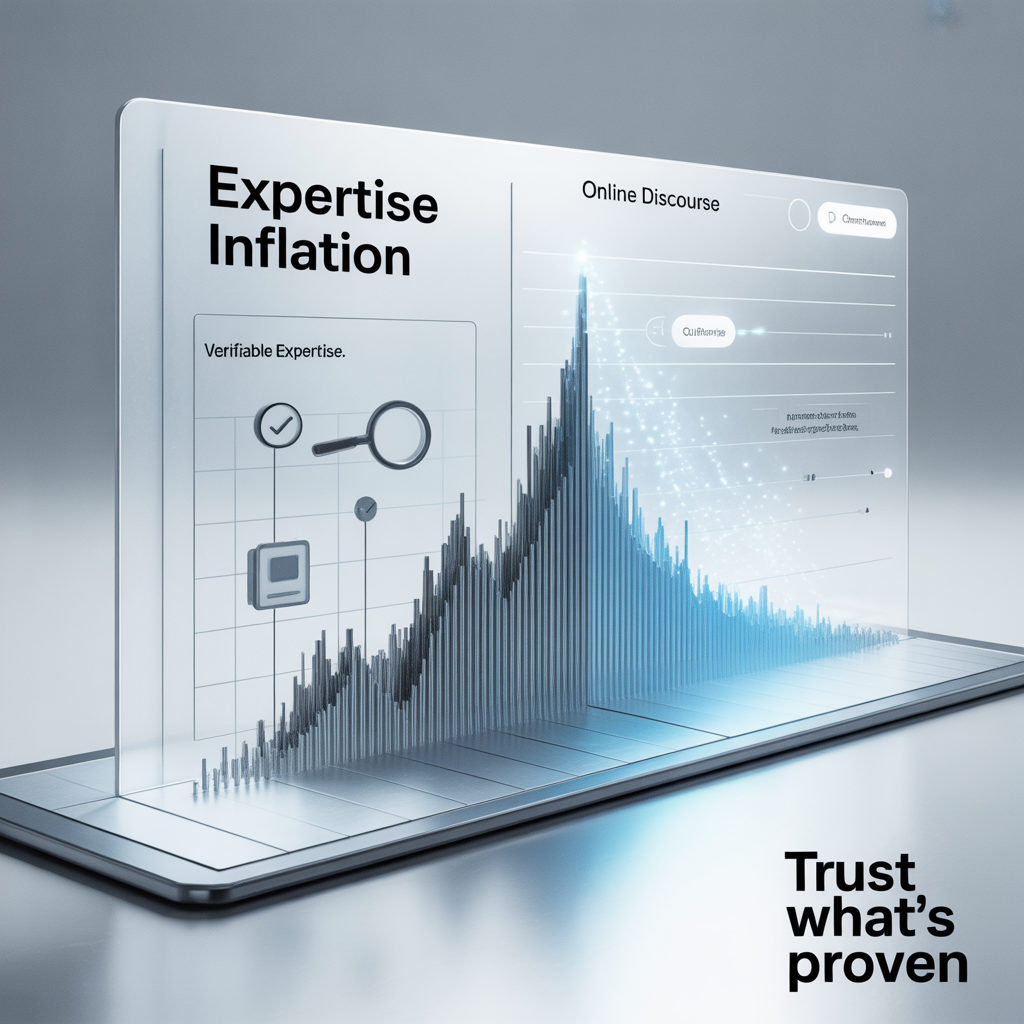
Expertise Inflation Index
A scientific pipeline that quantifies rhetorical inflation in AI discourse using dual LLM analysis, web scraping, and dashboards.
July 23, 2025

AI Vision
AI Vision and UI Testing
Compares commercial visual testing platforms with LLM-driven and hybrid solutions to show how AI vision raises the QA bar.
July 10, 2025
AI Protocols
Payloads, Promises, and Protocols: The MCP/A2A Tightrope
Clarifies where MCP ends and Google’s A2A begins, focusing on payload schemas, orchestration, and governance across multi-agent topologies.
June 27, 2025
Protocol Comparison
A2A & MCP: Competitors or Companions
An in-depth comparison showing how MCP and A2A can complement each other when you need both tool discovery and agent-to-agent coordination.
June 27, 2025
Communication Protocol
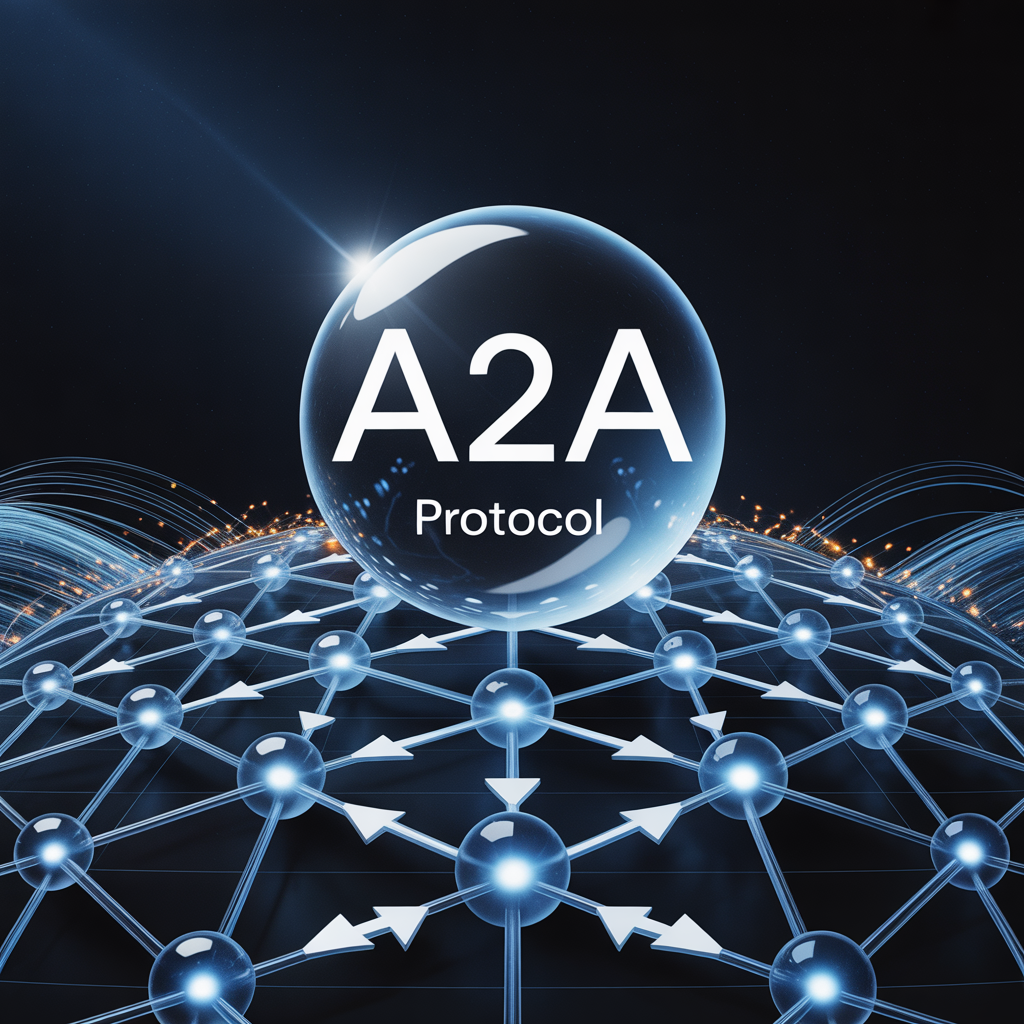
A2A Protocol
Google’s Agent-to-Agent protocol complements MCP by standardizing how agents communicate horizontally—unlocking multi-agent coordination.
June 19, 2025
AI Protocol
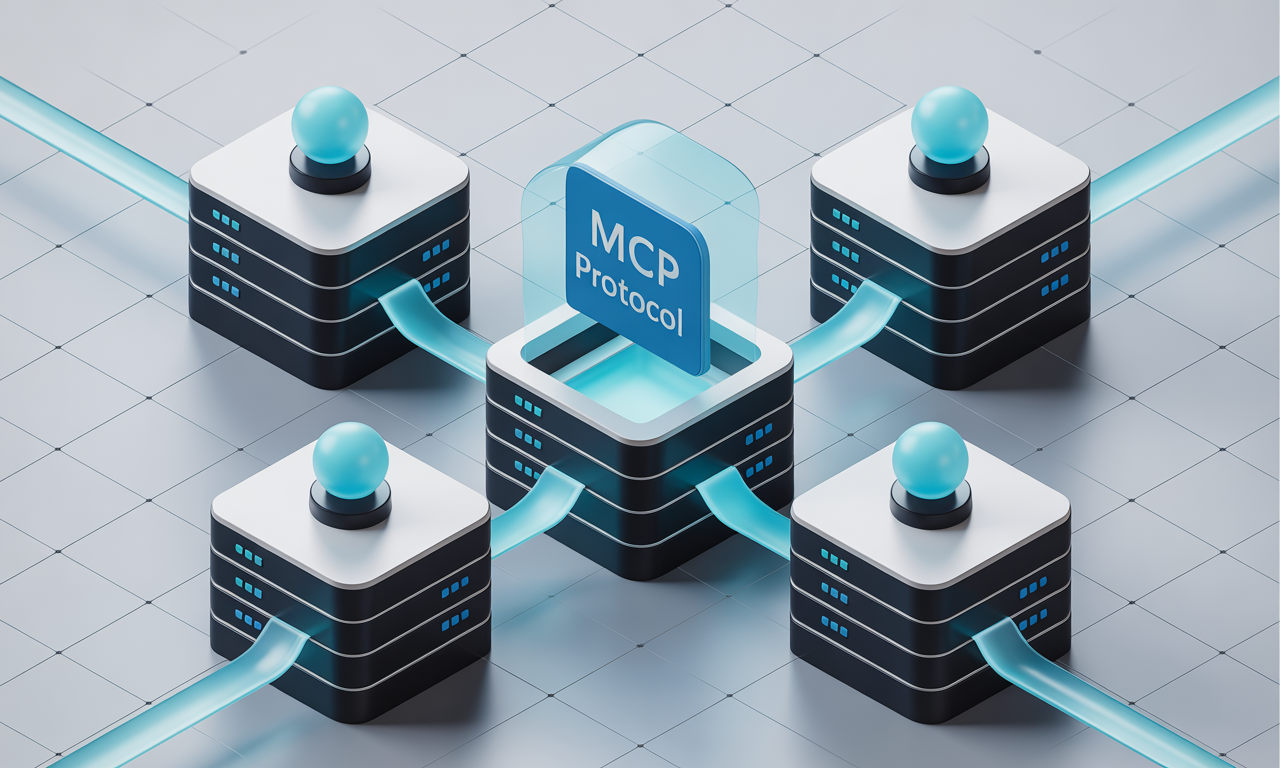
Model Context Protocol
MCP standardizes how AI systems discover and talk to existing tools, trading bespoke adapters for a universal context protocol.
June 13, 2025
AI Framework
Agentic Frameworks
A comprehensive breakdown of why agentic frameworks matter, how they’re built, and what it takes to ship reasoning, planning, and execution loops.
June 5, 2025